I’ve been training journalists in online investigations around the globe since 2014. I specialize in combining digital techniques with traditional reporting.
Most recently, I’ve been one of the instructors in the Global Investigative Journalism Network’s Digital Threats Course, which trained some 100 reporters over two years in incorporating online investigations tools in their reporting. I’ve also taught New Digital Investigative Techniques through the Knight Foundation and given workshops on how to use Telegram in investigations at the International Journalism Festival and through Poynter.
I favour hands-on training approaches that reporters can use regardless of the beat they cover.
I’m available for both online and in-person workshops. For pricing and availability, get in touch: jane@janelytv.com. I’m happy to tailor the available workshops to the needs of your newsroom or research outlet.
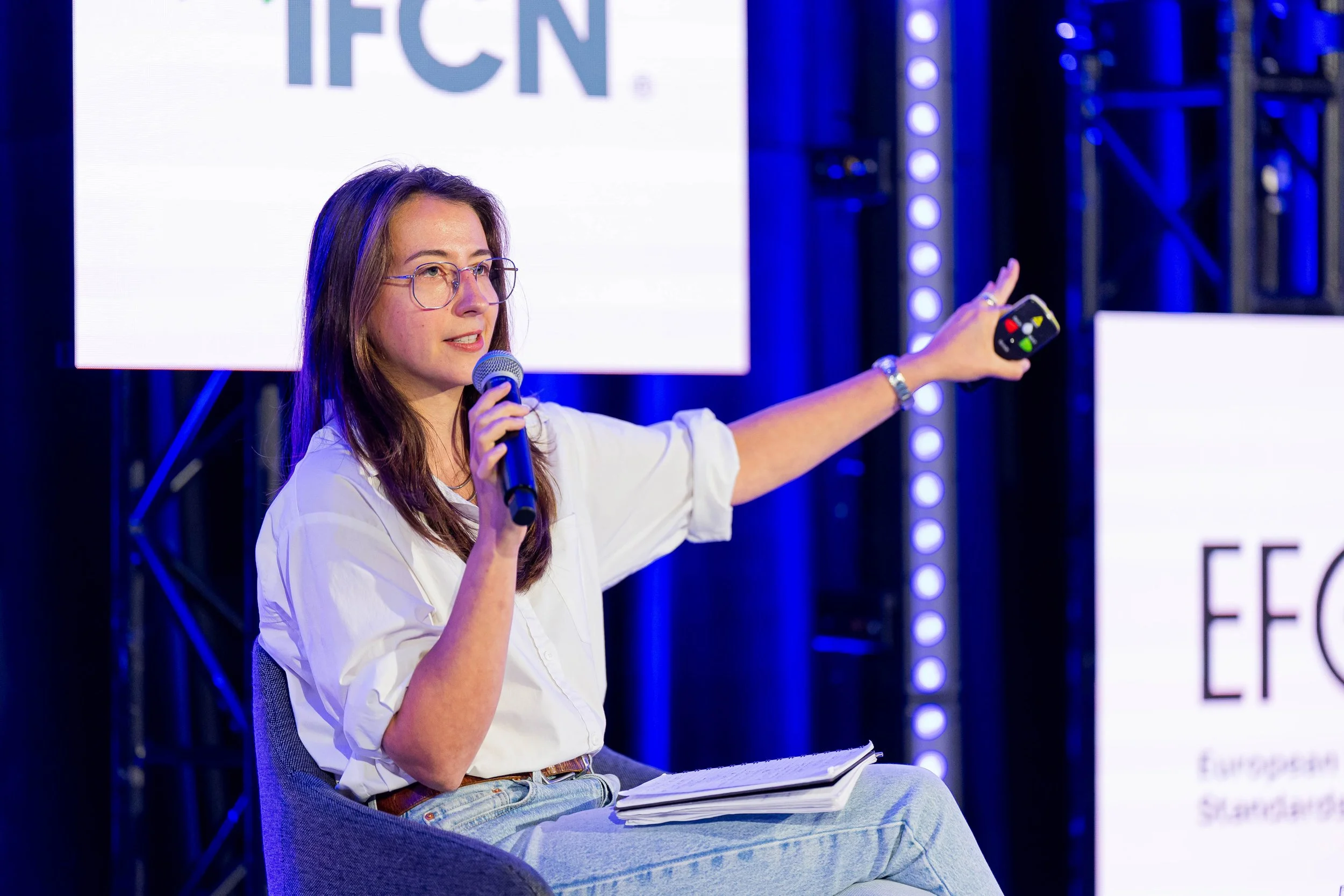
Available workshops include:
Interviewing for Digital Evidence | Duration: 60 minutes
Attendees will update their interview approaches to effectively work with sources to obtain digital evidence such as images, video, geolocation and online forum access.
The workshop will look at practical examples of how interviewing for digital evidence can enhance reporting.
Training will include a comprehensive preparation list for the technology needed to obtain evidence from sources.
Attendees will learn how to manage the source relationship for it to be beneficial in the long-term.
A tipsheet with an overview of tools, tech and approaches will be provided at the end of the workshop.
Telegram 101: Using Telegram in Online Investigations | Duration: 60 minutes
Attendees will be able to search the native Telegram app, download a channel’s contents, and understand how data on Telegram is structured.
Additionally, they will learn approaches to searching the wider web for Telegram channels, including tricks for Telegram research on other social media platforms.
Finally, attendees will learn about third-party tools that can simplify and supercharge Telegram research.
A tipsheet with an overview of tools and approaches will be provided at the end of the workshop.
Getting Started with Geolocation | Duration: 60 minutes
Attendees will be able to understand the thought process behind geolocation.
They will learn various tools, including Google Earth and street view services they can use to aid with geolocation.
Attendees will be shown AI-based approaches to geolocation and will learn how to verify the output of an AI tool.
A tipsheet with an overview of tools and approaches will be provided at the end of the workshop.
Using Google Advanced Search to find Sources, Documents, and Story Ideas | Duration: 60 minutes
Attendees will learn about Google search operators and their use cases.
We will use search operators to creatively search through social media, government websites, as well as finding maps, videos, and potential sources.
We will take up AI-based Advanced Search aids to understand how they can be useful in our work.
Integrating OSINT Into Shoe-Leather Reporting | Duration: 3 hours
Attendees will walk away with an out-of-the box skill set including:
An understanding of geolocation and mapping tools they can use for stories.
Concrete approaches for searching social media for sources.
New approaches to interviewing, which will help add new evidence to investigations.
A copy of the presentation and the resources in it for future reference.
Continuous access to the workshop lead if they need help in future projects.
Working with video, geolocation, Telegram, and monitoring | Duration: 6 hours (full day)
Attendees can expect to learn skills rooted in video verification, a key tool in a digital investigator’s Swiss army knife. This will include reverse video search, geolocation, and chronolocation.
The workshop will also include working with Telegram and searching for videos based on geolocation.
Reporters will also understand approaches to using advanced search to help with video work.
All skills will include practical examples. Although some examples will be provided, reporters are encouraged to bring their own projects that may benefit from these skills.